
PMO - Project Management
SMART Goals and Questions in Projects
In any project there must be SMART Goals and Questions, playing a fundamental role in personal or professional success.
Introduction
In any undertaking there must be SMART Goals and Questions, whether it is a personal, professional, or business project. Defining clear and objective goals plays a fundamental role in success. To ensure that these goals are achievable and measurable, many professionals turn to the SMART methodology. In this article, we will explore how to apply this methodology effectively in projects, highlighting the importance of SMART questions to guide the goal-setting process.
What are SMART Goals?
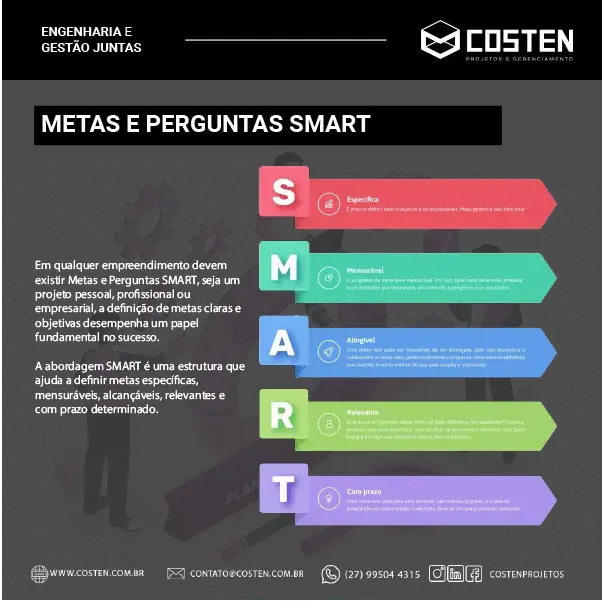
The SMART approach is a framework that helps define specific, measurable, achievable, relevant, and time-bound goals. Here is what each letter represents:
- Specific: Goals must be clear and well defined, avoiding ambiguity.
- Measurable: It must be possible to quantify or qualify progress toward the goal.
- Achievable: Goals must be realistic and attainable within the available circumstances and resources.
- Relevant: Goals must be aligned with the overall objectives of the project or initiative.
- Time-bound: There must be a defined deadline to achieve the goal, creating a sense of urgency and commitment.
How to Use the SMART Goals Methodology in Projects:
- Specific:
- SMART Question: What exactly do we want to accomplish?
- Example: Instead of defining a vague goal such as "improve customer satisfaction", be more specific, such as "increase the customer satisfaction score by 20% by the end of the quarter".
- Measurable:
- SMART Question: How can we measure progress and success?
- Example: If the goal is to increase sales, define a clear metric, such as "increase sales by 15% in the next fiscal year".
- Achievable:
- SMART Question: Is it possible to achieve this goal with the available resources?
- Example: Make sure the goal is realistic and within the team's capabilities and available resources.
- Relevant:
- SMART Question: Why is this goal important for the project or organization?
- Example: Check whether the goal is aligned with the project's overall objectives and contributes to overall success.
- Time-bound:
- SMART Question: When do we expect to achieve this goal?
- Example: Define a clear deadline, such as "achieve the cost reduction goal of 10% by the end of the next quarter".
Conclusion
The SMART goals methodology offers a valuable framework for defining and achieving objectives effectively in projects. By asking SMART questions during the goal-setting process, professionals can ensure that their goals are specific, measurable, achievable, relevant, and time-bound. By implementing this approach in your projects, you can significantly increase the chances of success and ensure that your goals are clear, achievable, and meaningful.