
Occupational Safety
Methodology for Risk Matrices
Improving workers environmental and health conditions not only allows the organization to meet legal requirements, but also contributes to quality of life.
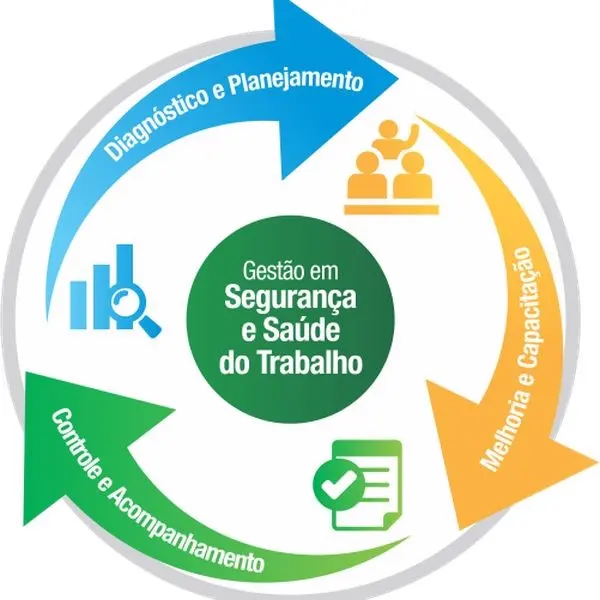
Improving workers' environmental and health conditions not only allows the organization to meet legal requirements, but also contributes to improving the quality of life of its employees. This is possible through the characterization and monitoring of hazards related to work activities.
By applying this methodology in risk management programs, the aim is to promote preventive action in occupational health and safety management. This is achieved through the identification, recognition, and classification of occupational risks, enabling effective management, either by eliminating these risks or by adopting control measures to minimize them.
THE METHOD
The methodology derived from FMEA and cited in ISO 31000 aims to categorize risks and considered the procedure for identifying and recognizing hazards, as well as assessing occupational risks. This method takes into account situations that may cause harm in a specific activity, environment, facility, or system, as established in the Regulatory Standards and other legal requirements related to occupational health and safety.
PRELIMINARY HAZARD SURVEY
It is necessary to carry out an initial hazard analysis covering all categories of risk factors (physical, chemical, biological, ergonomic, and mechanical). This must be done considering the specific characteristics of each situation, by applying the most appropriate technical criteria for each type of hazard and following the technical and legal references of the relevant regulatory standards.
ASSESSMENT OF OCCUPATIONAL RISKS
The probability, here considered as the adjusted product of Probability and Detection, to determine the possibility of injuries or health impairments occurring, must take into account:
- a) the requirements established in the regulatory standards;
- b) the prevention measures implemented;
- c) the requirements of the work activity; and
- d) the comparison between the occupational exposure profile and the reference values established in current legislation.
Detection is understood as the prevention measures implemented, considering the requirements established in the NRs and the history of occurrences related to the hazard under analysis.
The calculation is performed through (Probability x Detection)/4, rounding the value found upward, thus creating a reference matrix from 1 to 4.
Probability must be considered according to the least favorable index, observing the following profiles:
- Qualitative exposure profile - identifying the variables of time and exposure frequency;
- Quantitative exposure profile - when there are quantitative assessments in the case of physical and chemical risk factors, which take into account intensity/concentration, exposure time, and exposure frequency, compared with the reference values established in NR-09. If installed collective protection measures exist, exposure quantification must consider them.
Detection must be considered according to the least favorable index, observing the following profiles:
- Qualitative exposure profile - identifying the following variables: prevention measures (administrative measures), complaints from workers, and history of incidents/accidents;
- Quantitative exposure profile - when there are quantitative assessments in the case of physical and chemical risk factors, comparing the exposure level with reference values established in current legislation, considering the adoption of effective prevention measures. In this case, for control analysis purposes, only individual prevention measures should be considered, since collective prevention measures have already been considered previously.
Severity considers possible injuries or health impairments, and considers special criteria related to the hazard's potential to cause injuries or health impairments, such as:
- Toxicity, carcinogenic, mutagenic, and teratogenic potential of chemical and physical agents, which may be based on the classification of ACGIH and LINACH;
- Potential of chemical agents to cause injuries when in contact with eyes, mucosa, and skin;
- Classification for biological agents, according to data from the health department, data from the Hospital Infection Control Commission - CCIH, consultations with medical professionals, and other available technical documents.
The prioritization of actions must be established by the calculated NPR risk level. It is usual to define four categories of action prioritization according to the risk priority classification.
RISK PRIORITY LEVEL NPR
Several matrix models and surveys can be found and used. Ideally, the survey team should meet and define the criteria that best serve the group, category, or region of companies to which the matrix will be applied, in addition to adhering to the professional profiles of the team, thus having a matrix that communicates as faithfully as possible the risks existing in the work environments and the defined premises.
The model can be downloaded here, but we remind you: adjust it to your needs and particularities.
In short, the PGR highlights the relevance of safety culture, involving all hierarchical levels of the organization. Employee awareness, combined with effective training, is crucial for promoting safe behaviors and preventing accidents and occupational diseases.
Thus, through its prioritization, the risk matrix aims to guide companies on which action to take and when to carry it out.