
Occupational Safety
Challenges Companies Face in OHS Management
There are, on average, 700 thousand accidents per year. We can change this with planning; here are some of the challenges companies face in OHS management.
All companies must fit within OHS - Occupational Health and Safety standards. However, there are challenges in OHS management for most businesses.
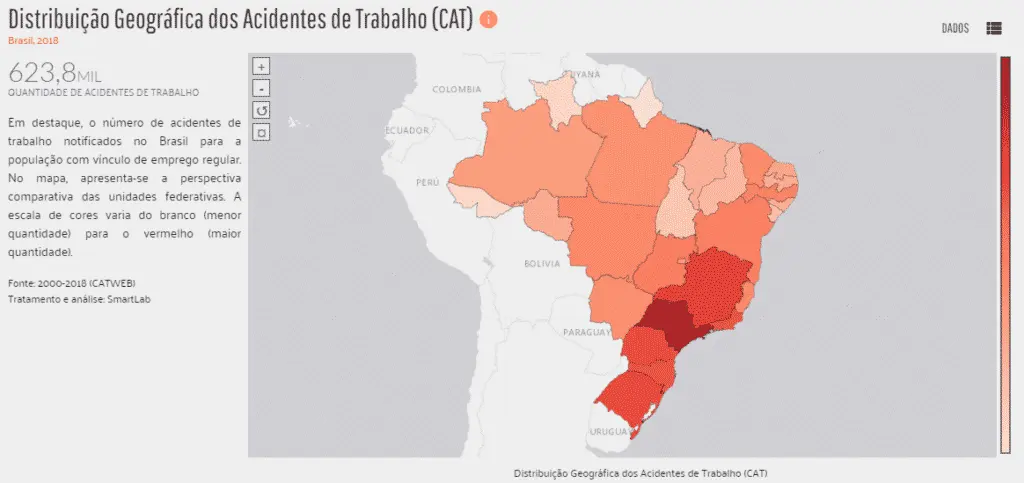
Brazil is the fourth country with the highest rate of workplace accidents. The country has a historical average of 700 thousand accidents per year. The estimate is that this number is underreported, meaning many cases are not even announced and end up not entering the statistics.
Is it worth investing in OHS?
Yes! The good news is that, once made, the investment can bring benefits to the organization's competitiveness. It places the company ahead of competitors by showing quality, organization, and professionalism, while also reducing accident risks. Therefore, this is an investment worth making. It adds value to the business. In other words, this is a benefit harvested by every organization, regardless of its field of activity, since the main asset of any company is people, and when they work in healthy environments, they deliver much more value to the organization.
In general, there are challenges in companies' OHS management that can be considered the biggest and often recur in every organization.
Legislation
Understanding legal obligations, gathering documents, and making the necessary adaptations are the main obstacles regarding legislation. All organizations are subject to the same laws, regardless of their size. However, fitting within the obligations is a greater obstacle for micro, small, and medium-sized companies.
Technical knowledge
Professionals specialized in OHS are expensive for an organization to keep full-time in the company. Performing the necessary checks and supervising compliance with obligations is a complex task that requires technical knowledge and full-time dedication. It is the kind of task that cannot be done by a layperson. In this case, it is important for the company to hire a professional or invest in specialized consulting.
Planning and dedicated time
Applying the standards is a customized process that must consider the specific characteristics of each organization, and planning is an important step. Gathering documents, studying the company's operation, and understanding which standards it must comply with at each stage of the process are some of the elements to be observed in this phase. All of this takes time, and this task cannot prevent the company from continuing to operate. In this sense, external consulting certainly tends to improve the process and deliver more results.
Financial management
Budget restriction may be the most tangible obstacle and, therefore, is often used as a decision factor for not adapting to the standards. But it is extremely dangerous to cut funds in the OHS area. This is because a workplace accident can lead a company to bankruptcy.
Employee training
One difficulty encountered by the vast majority of companies is workforce training within the process. Any work involving risk must be performed by a trained professional. This professional needs to know and respect safety procedures. Likewise, training employees, explaining the risks of the role and safe operation is the company's responsibility and is part of OHS requirements. In many cases, the company may be condemned for not providing training in this area.
How should we change this?
Companies need to understand the importance of the standards. Having a specialized consulting firm helps companies meet all requirements. This is the best way to overcome these obstacles and build a safe work environment for your company's employees.
Source: asonet (adapted)