
Civil Engineering
Differences Between 3D and BIM
What are the differences between 3D and BIM? They are two forms of three-dimensional modeling for engineering projects, but there is a major difference between them.
In this article we will understand the differences between 3D and BIM. I am referring to real BIM, and right from the start, know that:
"3D is not BIM, but all BIM is 3D."
Yes, as crazy as it may seem, it is the pure truth. First, let us understand each of the concepts.
What is a 3D system?
Through three-dimensional resources, it is possible to faithfully represent the result of a project with its most detailed aspects.
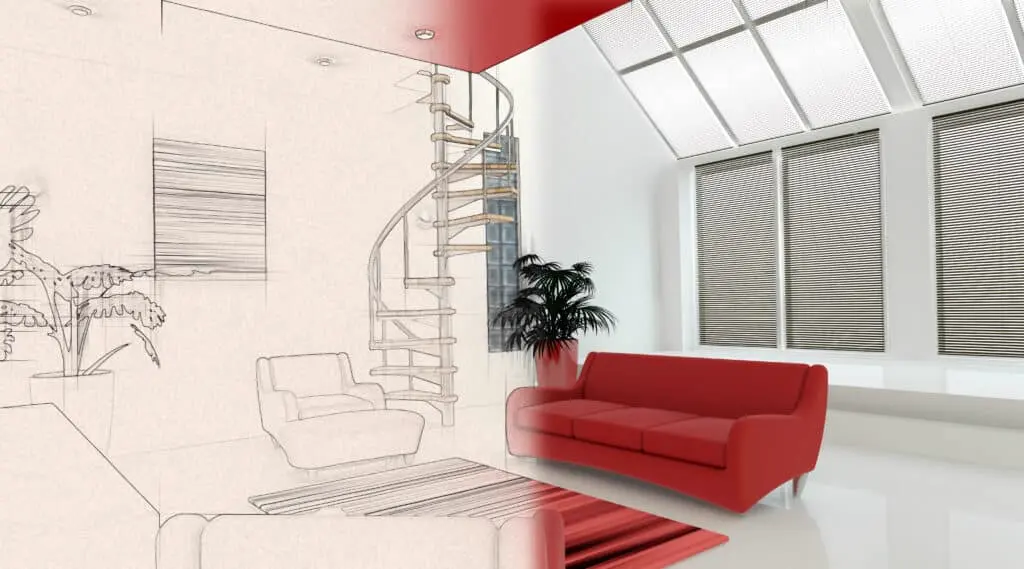
Colors, texture, environmental lighting, its areas, and even proportions can be determined with 3D software, simulating spaces with furniture, objects, and details practically identical to what will be found in the physical plan. There are some programs that allow a video to be created using the virtual project as a starting point. This gives the impression of being inside the environment.
"3D brings only the visual result."
What is the BIM system?
Construction Information Modeling is the translation of Building Information Modeling, BIM. In turn, it is a set of information that is generated and maintained for as long as the life cycle of a project exists.
This new concept uses 3D models, which are much easier to assimilate and are very faithful to the final product. However, a project is not only the final product; to obtain it, it is necessary to mobilize services, materials, and take the necessary measures so that it is executed efficiently. In some cases, managing this multidisciplinary collaboration is not so simple.
That is why the more information is known, the greater the chances of getting the planning and scheduling of activities right with more safety.
"BIM brings all the information needed to achieve the result with efficiency and agility."
What are the differences between 3D and BIM?
With BIM, it is possible to build a 3D virtual environment with characteristic objects. The objects have not only spatial properties, but also properties that are intrinsic to them.
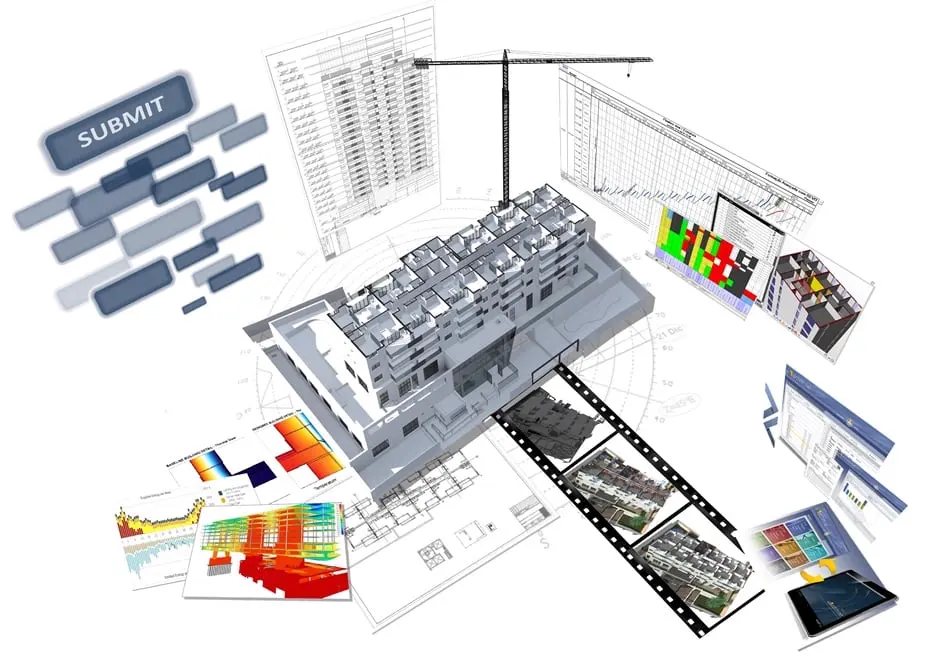
For example, a wall as an object in any 2D or 3D software can have its geometric representation, such as width, height, and thickness. In 3D we can view it from different angles, colors, etc.; these are visual aspects only.
In BIM, that same wall is a unique entity that has geometric elements, everything that 3D brings, plus other properties such as time, cost, material, weight, thermal transmittance, energy efficiency, and other possible dimensions that can be assigned in the BIM system.
Conclusion
The differences between BIM and 3D are many and occur due to technological advancement. With the BIM system, architecture and engineering professionals, stakeholders, business, and commercial teams can have a three-dimensional project and assign other information, helping reduce time and cost while improving quality.
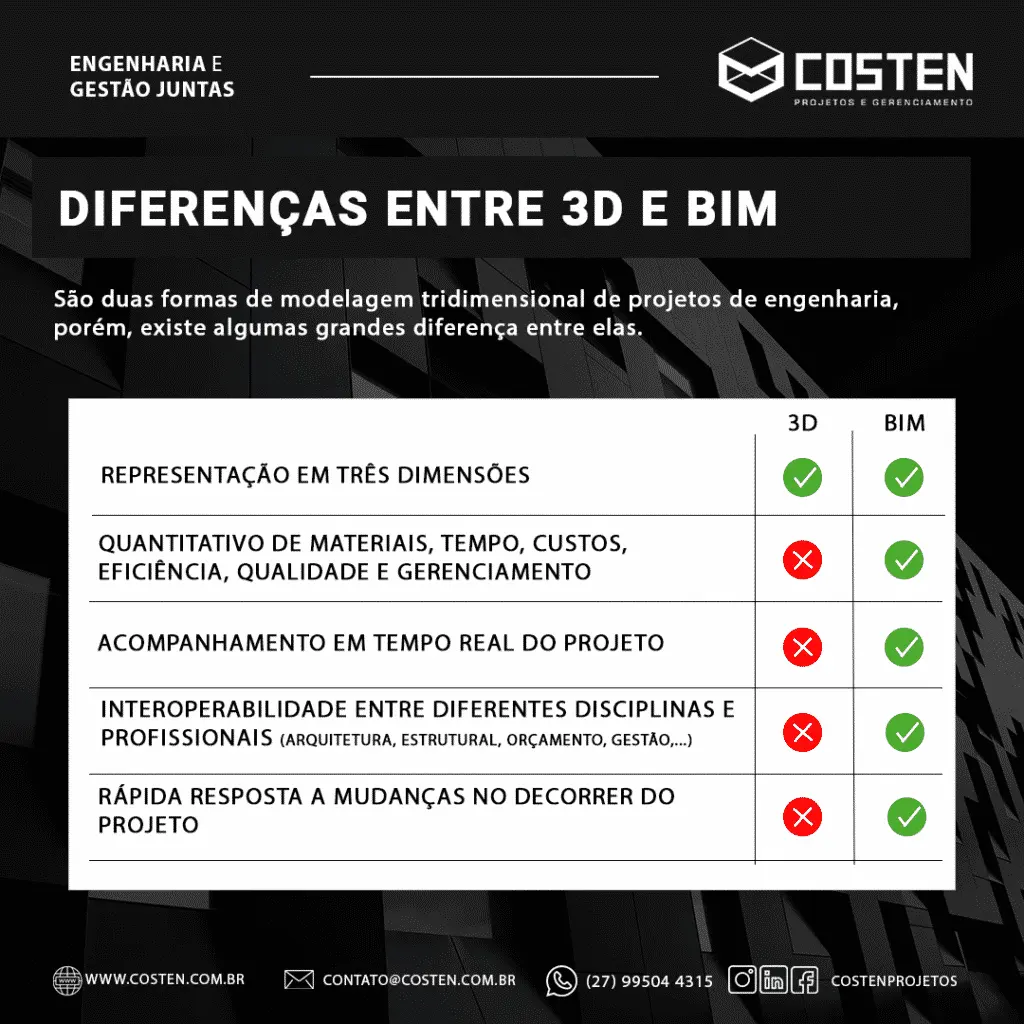
If your company is looking for the best solution to develop its projects and seeks information made available in real time and compliance with deadlines, the ideal choice is to invest in BIM.
We have reached the end of our text and hope you have understood the main differences between both modeling methods and, therefore, are able to choose the best one for your project: 3D or BIM.
COSTEN - Projects and Management

Our company COSTEN - Projects and Management focuses on technological solutions, always bringing the most current and efficient methods in the market to civil construction companies and other segments. Learn about our services in our specialties: